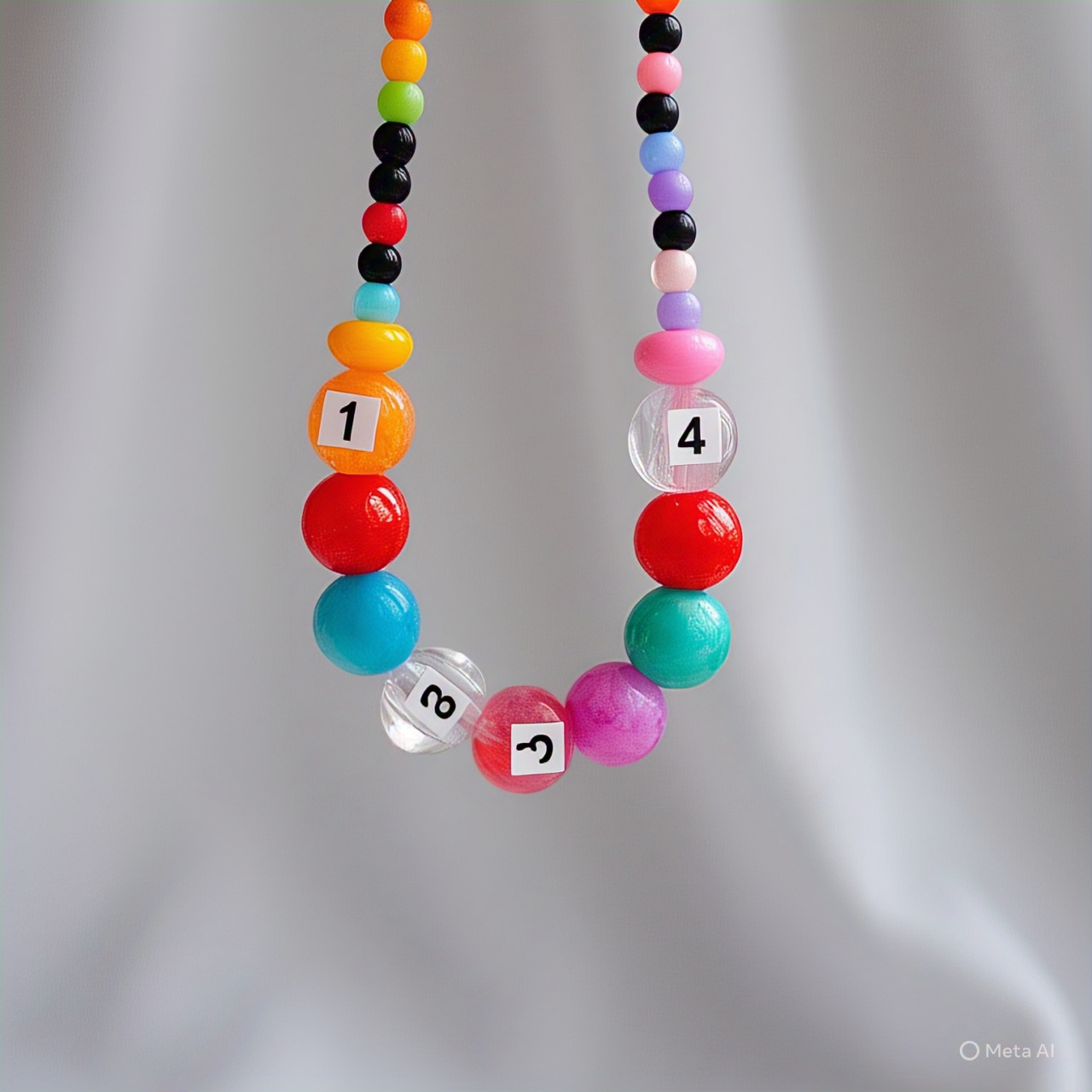
Strings in Python (Story of Necklace).
Think of Python String as a necklace where each character is a bead. You can observe, copy, or rearrange parts of it — but you can’t just swap a bead in place.
Strings are beautiful, delicate , and most importantly — immutable.
What is Strings in Python ??
A String is a sequence of characters wrapped in quotes.
text = "Python is fun"
Think of “Python is fun” as a “necklace of characters”.
Index:   0 1 2 3 4 5 6 7 8 9 10 11 12
Char :   P y t h o n   i s   f  u  n
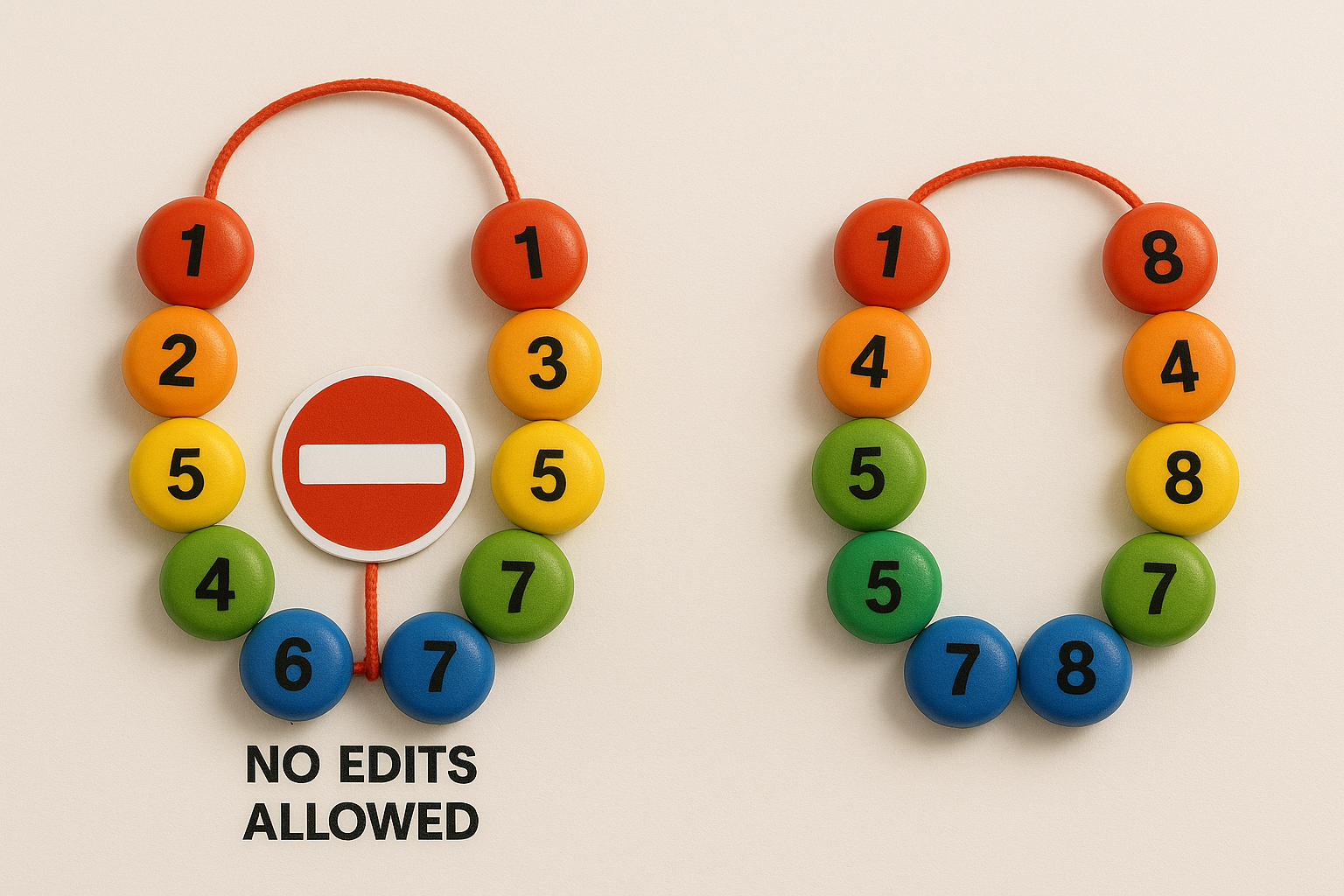
String Slicing : Cutting Your Necklace.
Syntax :-
string[start:stop:step]
| Slice | What It Does | Example | Output |
s[0:5] | Characters from index 0 to 4 | "Python"[0:5] | "Pytho" |
s[:6] | From start to index 5 | "Python"[:6] | "Python" |
s[2:] | From index 2 to end | "Python"[2:] | "thon" |
s[-1] | Last character | "Python"[-1] | "n" |
s[::-1] | Reversed string | "Python"[::-1] | "nohtyP" |
“Slicing is like cutting a portion of the necklace or reversing it by flipping it around.”

Immutable Nature of Strings
Python Strings are Immutable means you can ‘t change them after creation.
s = "hello"
s[0] = "H"  # ❌ Error!
“You can’ t just replace one bead in a sealed necklace. You have to make a new necklace.“
s = "hello"
s = "H" + s[1:]  # ✅ New string
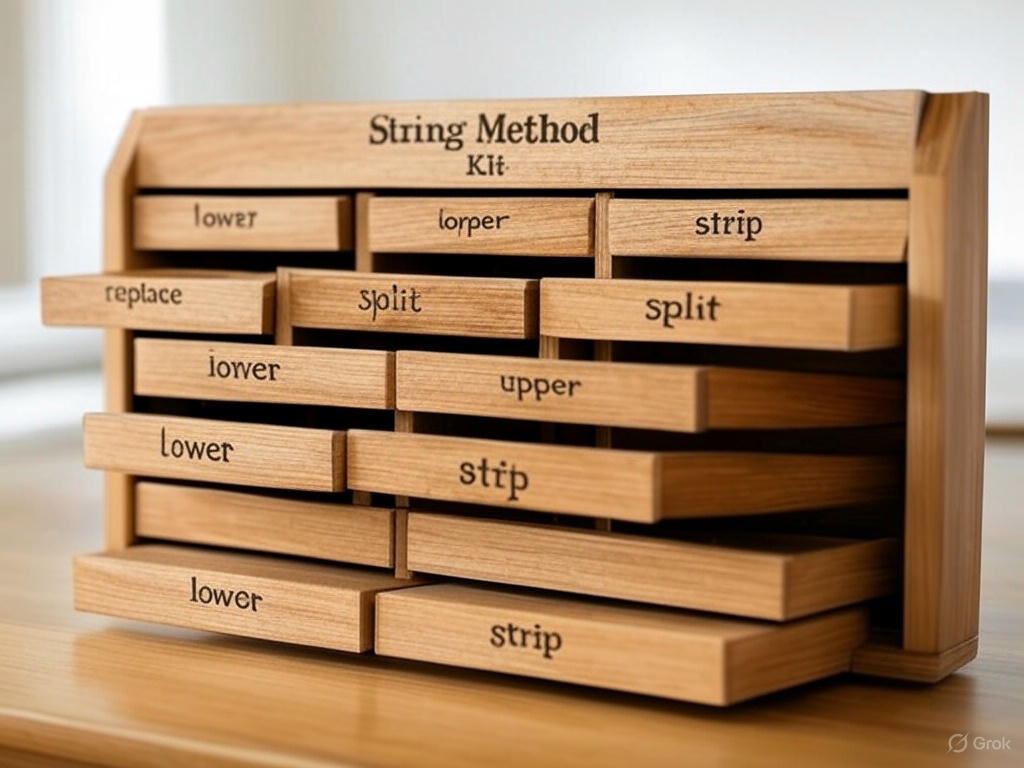
Commonly Used String Methods.
This is the go-to toolkit of strings methods, with examples and meanings.
| Method | Purpose | Example | Output |
.lower() | Convert to lowercase | "HELLO".lower() | "hello" |
.upper() | Convert to uppercase | "hello".upper() | "HELLO" |
.title() | Capitalize first letter of each word | "python is fun".title() | "Python Is Fun" |
.strip() | Remove whitespace | " text ".strip() | "text" |
.replace(a, b) | Replace substring | "hi buddy".replace("buddy","Mandeep") | "hi Mandeep" |
.find() | Find index of first occurrence | "python".find("t") | 2 |
.count() | Count occurrences of substring | "banana".count("a") | 3 |
.split() | Split into list | "a,b,c".split(",") | ['a', 'b', 'c'] |
.join() | Join list into string | ",".join(['a','b']) | "a,b" |
.startswith() | Check if starts with | "code".startswith("c") | True |
.endswith() | Check if ends with | "code".endswith("e") | True |
.isalnum() | Checks if all chars are alphanumeric | "abc123".isalnum() | True |
.isalpha() | Checks if all are letters | "abc".isalpha() | True |